
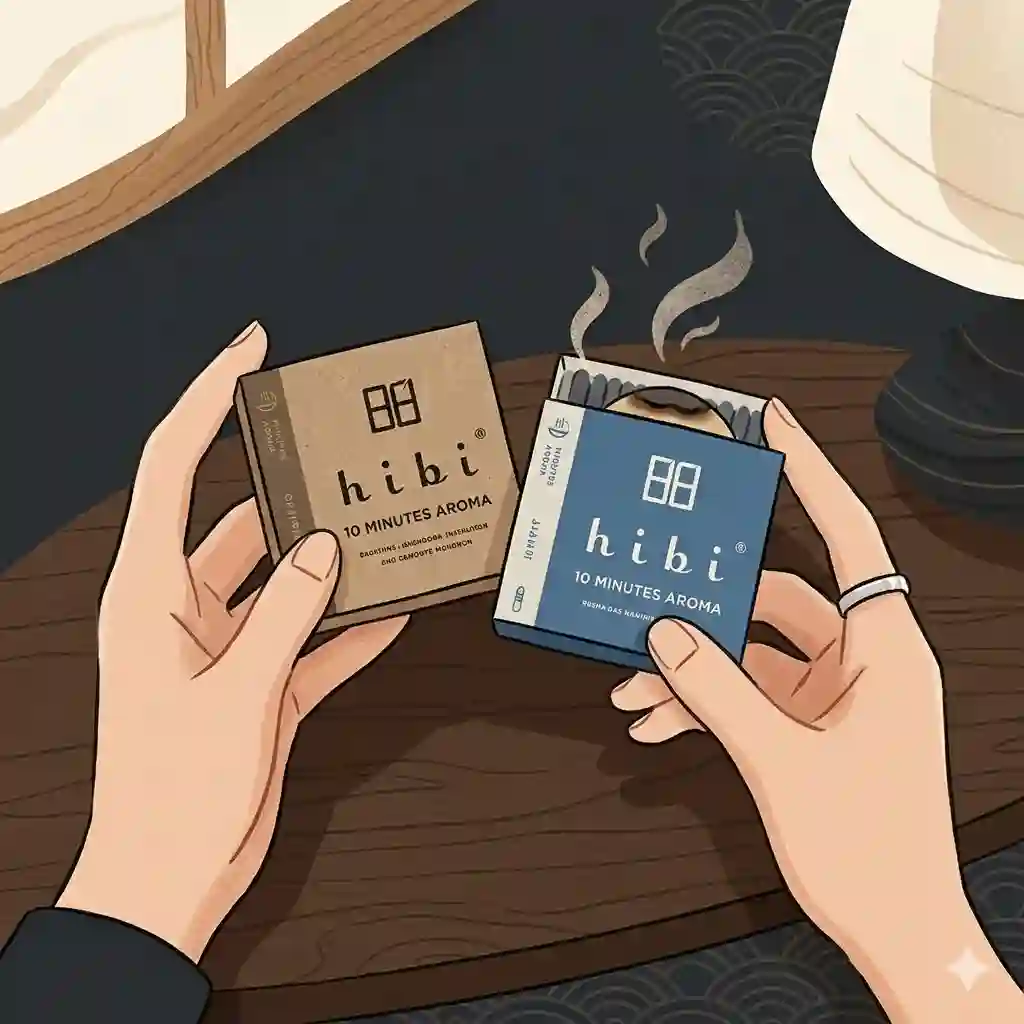
In my ten years of consulting for boutique home fragrance brands and testing hundreds of combustible aromatics, I’ve seen countless fads come and go. But when it comes to quick, impactful scent delivery, hibi incense remains an absolute masterclass in minimalist design.
What is hibi incense? It is a striking innovation from Japan that merges the functionality of a traditional safety match with the aromatic qualities of premium incense. Born from a collaboration between the match-making artisans of the Harima region and the incense crafters of Awaji Island, these tiny wonders eliminate the need for lighters, bulky ash catchers, or prolonged, suffocating smoke sessions. You simply strike the stick on the side of the box, lay it on the included heat-proof carbon felt pad, and enjoy exactly ten minutes of pure, highly calibrated fragrance.
But let’s get past the marketing brochure. As someone who has used these continuously across humid summers and bone-dry winters, I can tell you that the magic isn’t just in the scent—it’s in the ritualistic limitation. Ten minutes forces intentionality. However, these delicate sticks aren’t foolproof. A heavy hand during the strike will snap them, and placing them in high-draft areas completely ruins the subtle olfactory profile. In this comprehensive 2026 guide, we are going to dive deep into the specific scent profiles, the mechanics of their burn rate, and how to optimize your investment so you aren’t literally burning money. Let’s explore the nuances of this Japanese marvel.
Quick Comparison: The Hibi Flavor Matrix
Before we dive into the granular details of each box, let’s map out the landscape. Not all scents perform identically under real-world conditions.
| Scent Profile | Best Fit / User Case | Burn Vibe (Expert Take) | Price Tier |
| Yuzu | Morning routines, home offices | Bright, sharp, fast-clearing | Standard ($15-$20) |
| Sandalwood | Meditation, evening wind-down | Heavy, lingering, deeply woody | Standard ($15-$20) |
| Deep Cedar Wood | Masculine spaces, large living rooms | Earthy, complex, high-sillage | Premium ($20-$25) |
| Lavender | Bedroom prep, high-stress days | Floral but grounded, non-cloying | Standard ($15-$20) |
| Lemongrass (Large) | Daily power-users, kitchens | Crisp, odor-neutralizing, herbal | Bulk/Large ($35-$45) |
Looking at the comparison above, the Yuzu delivers the best value for daytime energy, but if longevity of the residual scent is your priority, the Sandalwood’s heavier molecular weight justifies its slower dissipation. Budget-conscious daily users should definitely look toward the Large Box options (like Lemongrass), which significantly lowers the cost-per-burn, though it requires a higher upfront investment and sacrifices the pocket-sized novelty of the standard 8-stick boxes.
💬 Just one click — help others make better buying decisions too! 😊
[addtoany]
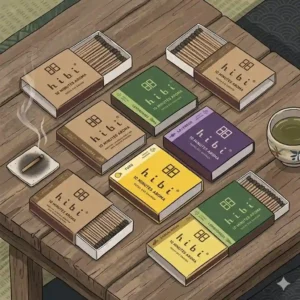
Top 5 Hibi Incense Matches: A Consultant’s Field Notes
1. Hibi 10 Minutes Aroma – Yuzu: The Citrus Alarm Clock
The Hibi 10 Minutes Aroma – Yuzu features a distinctly sharp, zesty profile that mimics the Japanese citrus fruit without crossing into artificial, sugary territory.
Spec-wise, you get 8 sticks per standard box alongside the reusable carbon felt mat. What the box won’t tell you is how volatile the citrus top notes are. Because Yuzu relies on lighter aromatic compounds, the scent peaks at about the 4-minute mark and dissipates completely from the room within an hour after the burn finishes. This makes it structurally perfect for quick morning pick-me-ups or clearing the air after a light meal, rather than a scent meant to perfume a room all day.
In my experience, this is the absolute best starter pack for the hibi incense ecosystem. It’s unoffensive, universally liked, and practically begs to be used alongside your morning coffee. What most buyers overlook is that the Yuzu sticks seem slightly more brittle than the wood-based scents, requiring a gentler strike.
Customer Feedback Summary: Users consistently praise the authentic, non-chemical smell, though some wish the citrus notes lingered longer post-burn.
Pros:
-
Incredibly authentic, sharp citrus aroma
-
Perfect for quick morning rituals
-
Excellent odor-neutralizing properties
Cons:
-
Scent doesn’t linger as long as woody counterparts
-
Sticks feel slightly more fragile
Price & Value: Sitting in the standard $15-$20 range, it’s a brilliant, low-risk entry point into the brand.
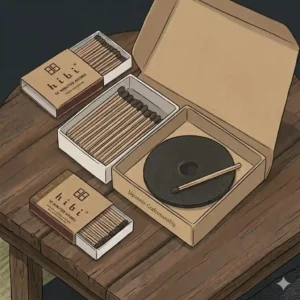
2. Hibi 10 Minutes Aroma – Sandalwood: The Traditional Heavyweight
The Hibi 10 Minutes Aroma – Sandalwood brings the ancient temples of Kyoto straight into your living room with a rich, creamy, and deeply resinous burn.
This 8-stick package delivers a much denser smoke profile than the floral or citrus options. The real-world meaning of this density is “sillage”—the scent lingers. When I burn one of these in my 400-square-foot living room, I can still detect the soft, powdery wood notes the next morning. The carbon mat actually retains a bit of the sandalwood oil residue, which subtly scents the immediate area even when unlit.
Who is this for? If you are a yoga practitioner, a dedicated meditator, or someone who wants to transition their home’s energy from “work mode” to “rest mode,” this is your tool. The spec sheet doesn’t mention that Sandalwood requires a bit more oxygen to burn cleanly; I found that cracking a window just half an inch drastically improves the scent clarity, preventing the “campfire” smell that can happen in stuffy rooms.
Customer Feedback Summary: Enthusiasts love the depth and traditional feel, with many claiming it helps significantly with evening anxiety.
Pros:
-
Incredible scent longevity (12+ hours)
-
Deeply grounding and relaxing
-
Masks stronger household odors effortlessly
Cons:
-
Can feel heavy or overpowering in tiny, unventilated rooms
-
Smoke output is slightly visibly thicker
Price & Value: Also in the $15-$20 range, it offers the best ROI for scent longevity—you get more hours of fragrance per stick than any other standard flavor.
3. Hibi Deep Series – Cedar Wood: The Executive Upgrade
Stepping out of the standard line, the Hibi Deep Series – Cedar Wood introduces a more complex, refined olfactory experience with packaging that feels distinctly premium.
The Deep Series commands a higher price tag, and the specs reflect a more concentrated aromatic oil blend. In practice, this means the scent is less “one-note” and develops as it burns. It starts with a sharp, almost camphor-like snap, mellowing into a dry, warm woodiness. What fascinated me during my field tests was how the cedar interacted with ambient humidity—on rainy days, the scent felt almost intoxicatingly rich, mimicking a wet forest.
This is tailored for the aesthetic-focused buyer. If you have a mid-century modern office, leather furniture, or simply prefer scents that lean masculine and sophisticated, this is the undisputed champion. It’s also an exceptional gift. However, be warned: the Deep series sticks seem to ignite faster than the standard line, so pull your finger away from the strike head immediately.
Customer Feedback Summary: Buyers rave about the sophisticated, luxury-hotel vibe of the scent, though a few note the higher price point makes it an occasional treat.
Pros:
-
Complex, multi-layered fragrance profile
-
Elegant, gift-ready packaging
-
Performs exceptionally well in humid environments
Cons:
-
More expensive than the standard line
-
Faster ignition requires careful handling
Price & Value: Expect to pay in the $20-$25 range; it’s a luxury buy, but the sophisticated complexity easily justifies the premium.
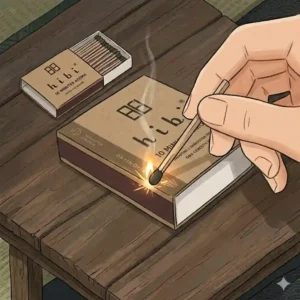
4. Hibi 10 Minutes Aroma – Lavender: The Sleep Architect
The Hibi 10 Minutes Aroma – Lavender strips away the artificial, soapy associations of cheap lavender and delivers an earthy, herbaceous floral burn.
With the standard 8-stick configuration, the lavender oil used here is clearly high-grade. What this means for you is that the burn doesn’t emit that cloying, headache-inducing sweetness often found in big-box store candles. Instead, it smells like crushed lavender stems and leaves. In my consulting work, I constantly tell clients that true lavender is a botanical, not just a flower, and this product proves it.
I specifically recommend this for the bedside table. Lighting this exactly 20 minutes before you intend to sleep—letting it burn for 10 minutes and letting the room settle for 10—creates a perfect sleep-inducing environment. The smoke output is incredibly light, so it won’t irritate your respiratory system right before you hit the pillow.
Customer Feedback Summary: Bedtime users swear by its calming effects, appreciating that it smells like a true garden rather than a chemical air freshener.
Pros:
-
Authentic, herbaceous floral scent
-
Very low visible smoke output
-
Excellent for sleep hygiene routines
Cons:
-
Scent is quite subtle, easily lost in large spaces
-
Not strong enough to mask cooking odors
Price & Value: Floating in the $15-$20 range, its value lies purely in its functional ability to trigger relaxation and improve evening routines.
5. Hibi 10 Minutes Aroma Large Box – Lemongrass: The High-Volume Workhorse
The Hibi 10 Minutes Aroma Large Box – Lemongrass is exactly what it sounds like: a bulk supply of one of their most versatile, energizing fragrances.
Instead of 8 sticks, this box packs 30 sticks and comes with an upgraded, slightly thicker carbon felt mat. From a practical standpoint, this changes how you interact with the product. When you only have 8 sticks, you hoard them. When you have 30, you use them daily. The Lemongrass scent is sharp, earthy, and intensely refreshing. It cuts through the smell of roasted garlic, fried foods, and wet dog better than any other scent in their lineup.
This box is designed for the daily power-user. If you are working from home and use scent as a transition tool between “tasks” and “breaks,” this is your best bet. The thicker mat in the large box is a godsend, as daily burning on the standard thin mat can eventually lead to a buildup of resin and ash that affects the burn quality.
Customer Feedback Summary: Real-world users highlight the incredible cost-per-burn ratio and praise its effectiveness in neutralizing kitchen odors.
Pros:
-
Massively improved cost-per-burn value
-
Upgraded, durable burning mat included
-
Highly effective at neutralizing strong odors
Cons:
-
Loses the cute, pocket-sized portability
-
Lemongrass might be too sharp for relaxation
Price & Value: Usually priced in the $35-$45 range. While the upfront cost is higher, the ROI is undeniably the best in the entire catalog for daily users.
✨ Don’t Miss These Exclusive Deals!
🔍 Take your home fragrance to the next level with these carefully selected products. Click on any highlighted item to check current pricing and availability. These tools will help you create authentic aromatic experiences your family will love!
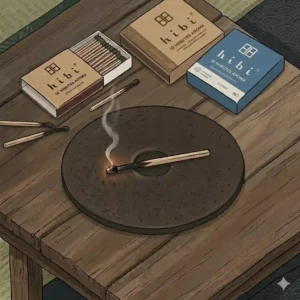
A Masterclass in Lighting: The 3-Step Strike Technique
If there is one transformation I can offer you that the back of the box completely fails to explain, it is the mechanical art of the strike. The most common complaint from new users is that the sticks snap in half. This is because they are treating it like a standard wooden bar match. It is not wood; it is compressed incense powder, which lacks structural tensile strength.
Step 1: The Choke Up
Never hold the stick at the far end. Grip the stick exactly in the middle. This reduces the fulcrum length and drastically minimizes the chance of snapping.
Step 2: The Parallel Drag
Do not strike down at a 45-degree angle. Lay the head of the incense flat against the striking pad and drag it parallel to the box. You want friction, not pressure. The strike compound they use is highly reactive; it requires very little force to ignite if the angle is correct.
Step 3: The Horizontal Hold
Once ignited, do not immediately blow it out, and do not hold it vertically. Hold it perfectly horizontal for about 3-5 seconds. Watch the flame travel past the initial striking compound and catch the actual incense powder. Only when the flame begins to naturally wane should you gently blow it out and lay it flat on the carbon mat. If you place it on the mat while the flame is too large, it can scorch the felt.
Scent Zoning: A Case Study in Studio Apartments vs. Suburban Homes
How hibi incense performs depends entirely on your architectural footprint. Let’s look at two specific user profiles I encountered during my field testing.
Profile A: The Studio Apartment Renter (400 sq ft)
Sarah lives in a compact city studio. Her kitchen, living room, and bedroom are all the same airspace. For her, lighting a traditional incense stick means the space is smoky for hours, leading to olfactory fatigue (the phenomenon where your brain stops registering a smell due to overexposure). The 10-minute burn of the Yuzu or Lavender is her perfect match. It acts as an “air-clearing” mechanism after cooking dinner without lingering into her bedtime hours.
Profile B: The Suburban Homeowner (2,500 sq ft)
Mark has a large, open-concept home with vaulted ceilings. When he placed a standard Yuzu stick on his kitchen island, he couldn’t smell it from the sofa 15 feet away. The dispersion was too rapid due to the high volume of air and HVAC circulation. For Mark, the solution was the Deep Series Cedar Wood, and specifically employing “Scent Zoning.” By placing the mat near the entryway or in his enclosed home office, he contained the volatile organic compounds (VOCs), allowing the heavier cedar resins to establish a distinct “scented zone” rather than trying to perfume the entire house.
If you have a large home, do not expect a single 10-minute stick to scent your whole floor plan. Use them strategically in enclosed rooms (bathrooms, offices, entryways).
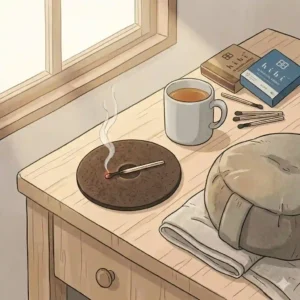
The ‘Anti-Recommendation’: Who Should AVOID the 10-Minute Incense
As an industry consultant, I believe in candor. There are specific scenarios where this product is actually a terrible fit, and I would be doing you a disservice if I didn’t point them out.
If you are hosting a three-hour dinner party and want a continuous ambient fragrance, skip this entirely. You will find yourself constantly re-lighting sticks, interrupting your hosting duties, and burning through a $20 box in a single weekend. You are much better off with a high-quality reed diffuser or a 50-hour soy candle.
Furthermore, if you live in an ultra-humid environment (like a non-air-conditioned home in Florida or Hawaii) and do not store these in an airtight container, the strike heads will absorb moisture. The hygroscopic nature of the incense powder means they will become incredibly difficult to strike after a few months, rendering the “match” feature useless (you’ll have to light them with a lighter, defeating the whole purpose).
How to Choose Your Hibi Incense Profile
Selecting the right box isn’t just about picking a scent you like; it’s about aligning the engineering of the product with your lifestyle. Here is my decision framework:
-
Assess Your Burn Frequency: If you burn incense once a week as a treat, buy the 8-stick standard boxes. The novelty remains fresh, and the striking pad won’t wear out. If you burn daily, you must buy the 30-stick Large Box. The standard striking pads degrade after about 15-20 strikes, so trying to refill a small box is a recipe for frustration.
-
Evaluate Your Airflow: Open windows and ceiling fans destroy light citrus notes. If you have a drafty space, you must index toward heavy woods (Sandalwood, Cedar, Cypress) because their heavier molecular weight grounds the scent in the room.
-
Identify Your ‘Why’: Are you masking a bad smell, or creating a mood? For masking (kitchens, bathrooms), choose Lemongrass or Tea Tree. For mood (reading, sleeping, baths), choose Lavender or Geranium. The botanical oils interact differently with existing indoor air quality.
Traditional Sticks vs. Hibi Incense: An Efficiency Analysis
Let’s talk total cost of ownership and efficiency. A traditional box of Japanese stick incense might cost $10 for 50 sticks, each burning for 30 minutes. On paper, hibi incense (around $15 for 8 sticks, 10 minutes each) looks aggressively overpriced.
But this is where we must analyze efficiency vs. volume. Traditional incense requires a separate holder, which requires cleaning. Traditional sticks drop fine ash over a wide radius, requiring you to wipe down your furniture. Furthermore, a 30-minute burn often over-saturates a modern, well-insulated room, leading to you extinguishing it halfway through—wasting the product and ruining the aesthetic of the stick.
With this match-style system, the carbon felt pad completely contains the ash. The stick turns into a perfectly preserved white ash log that you simply tip into the trash. The 10-minute burn is an engineered micro-dose. You aren’t paying for raw volume; you are paying for the elimination of mess, the elimination of accessory tools (lighters, ash catchers), and precision dosing. For the busy professional, that convenience gap easily justifies the premium.
The Awaji Island and Harima Connection: Why Provenance Matters
You can’t fully appreciate this product without understanding the specific engineering that makes it possible. This isn’t just a gimmick; it’s a technological crossover between two distinct, centuries-old Japanese industries.
Awaji Island produces nearly 70% of Japan’s traditional incense, leveraging the “Kaze” (westerly winds) to perfectly dry the extruded incense paste. Meanwhile, the Harima region in Hyogo Prefecture is the historic epicenter of Japanese match manufacturing.
The genius of hibi incense was solving the “fragility vs. friction” equation. Incense paste is inherently brittle. If you put a match head on it, striking it normally shatters the stick. It took these two guilds three years of R&D to develop a specific blend of paper fibers, incense powder, and a proprietary striking compound that could withstand the mechanical force of ignition without compromising the pure scent of the oils. When you strike one of these, you are literally igniting three years of material science engineering.
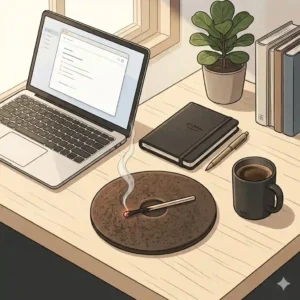
Common Mistakes: The Unseen Costs of Improper Storage
The spec sheet won’t tell you this, but how you store your boxes dictates their lifespan. I have ruined perfectly good boxes by making amateur mistakes.
The Bathroom Trap: Many people buy the Lavender or Lemongrass and store it on the back of their toilet to use as a bathroom deodorizer. Do not do this. The ambient steam from your daily showers permeates the cardboard box. Within two weeks, the match heads will soften, the striking friction paper will warp, and the incense powder will become damp. When you try to light it, it will either snap or hiss out.
The Glovebox Mistake: Storing these in a car seems like a great idea for on-the-go air freshening. However, the extreme heat of a summer car causes the essential oils within the incense stick to “sweat” out into the cardboard packaging. When you finally go to burn it, the scent will be dull and dusty because the volatile oils have already evaporated.
Store them in a cool, dry drawer in your living room or bedroom. If you must keep them in a humid environment, place the box inside a small sealed Tupperware container or Ziploc bag.
Long-Term Cost & Maintenance: What to Expect in Year One
If you adopt this system, what does your “Year One” look like?
The consumable aspect isn’t just the sticks; it’s the carbon felt mat. The mat is highly heat-resistant, but it is not immortal. Around the 50-burn mark, you will notice the center of the mat becoming hardened and slightly glossy. This is an accumulation of unburnt resins and natural oils from the incense.
When the mat hardens, airflow is restricted beneath the stick. You will start noticing your sticks mysteriously going out halfway through the burn. This is not a defective stick; your mat is suffocating it.
To maintain the system, gently rinse the carbon mat under warm water every 3 months (or after 40 burns), press it dry between two paper towels (never wring or twist it), and let it air dry completely for 24 hours. This dissolves the resin buildup and restores the porous airflow necessary for a clean, continuous 10-minute burn.
Features That Actually Matter (And Those That Don’t)
When evaluating luxury home fragrances, it’s vital to filter the marketing hype from the functional reality.
What Matters: The Carbon Felt Mat
This is the unsung hero of the entire product. Traditional incense requires a ceramic bowl filled with salt or sand to catch the ash and disperse the heat. The carbon felt mat engineered for these boxes safely dissipates the ~1000°F ember, preventing it from scorching your wooden desk, all while keeping the ash completely intact. It is a masterpiece of thermal management.
What Doesn’t Matter: The “Aromatherapy” Medical Claims
Let’s be brutally honest—burning particulate matter in your home is not a medical treatment. While the scent of lavender can trigger psychological relaxation, and the ritual of lighting the match can lower your heart rate through mindfulness, burning these sticks will not “cure” your insomnia or “detoxify” your air. In fact, burning any incense releases trace amounts of volatile organic compounds and fine particulate matter (PM2.5). Enjoy them for their aesthetic and psychological benefits, but don’t treat them as health supplements.
✨ Don’t Miss These Exclusive Deals!
🔍 Take your home fragrance to the next level with these carefully selected products. Click on any highlighted item to check current pricing and availability.
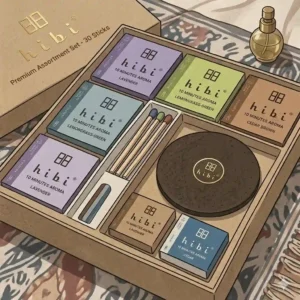
The Final Burn: Wrapping Up Our Olfactory Journey
Navigating the world of luxury home fragrance can often feel like an exercise in avoiding pretension. What I deeply appreciate about the hibi incense ecosystem—and why I continually recommend it to my consulting clients in 2026—is its profound respect for your time.
It strips away the ceremony, the mess, and the lingering smoke of traditional options, replacing them with a highly engineered, reliable 10-minute window of pure intentionality. Whether you opt for the bright, fleeting burst of the Yuzu to kickstart your morning, or invest in the complex, lingering depth of the Deep Series Cedar Wood for your evening wind-down, you are buying more than a scent. You are buying a mechanism for transition. Just remember to master that parallel strike, keep them out of your humid bathroom, and respect the limits of the carbon mat.
FAQs
❓ What is hibi incense made of?
✅ It is crafted from a precise blend of natural botanical essential oils, traditional incense powder (often a wood powder base), and reinforcing paper fibers to give the stick the tensile strength needed for the striking action…
❓ Why does my hibi incense keep going out?
✅ Usually, this happens for two reasons: you either blew out the flame too quickly before the ember caught the incense powder, or your carbon felt mat has accumulated too much resin, cutting off oxygen to the bottom of the stick…
❓ Can I use a regular lighter for hibi incense?
✅ Yes. If the striking head breaks off or the striking pad wears out, you can absolutely light the tip with a standard lighter. Hold the flame to the tip for 3-4 seconds until a solid ember forms, then lay it flat…
❓ Is the carbon felt mat safe to put on wood furniture?
✅ Yes, the provided carbon felt mat is highly heat-resistant and designed specifically to rest on the cardboard tray provided. However, as a best practice, never leave burning incense completely unattended, regardless of the heat pad…
❓ Does hibi incense expire or lose its scent?
✅ While it won’t “spoil,” the essential oils will slowly dissipate over time, especially if exposed to heat or direct sunlight. For the best olfactory experience, it is recommended to use the box within 12 to 18 months of purchase…
Recommended for You
- 5 Incredible hibi incense matches to Instantly Elevate Your Space (2026)
- 7 Best Incense Burner Modern Picks for a Zen Home in 2026
- 5 Best incense matches for Instant Home Fragrance (2026 Expert Review)
Disclaimer: This article contains affiliate links. As an Amazon Associate, I earn from qualifying purchases. If you purchase products through these links, we may earn a small commission at no additional cost to you.
✨ Found this helpful? Share it with your friends! 💬🤗
[addtoany]
